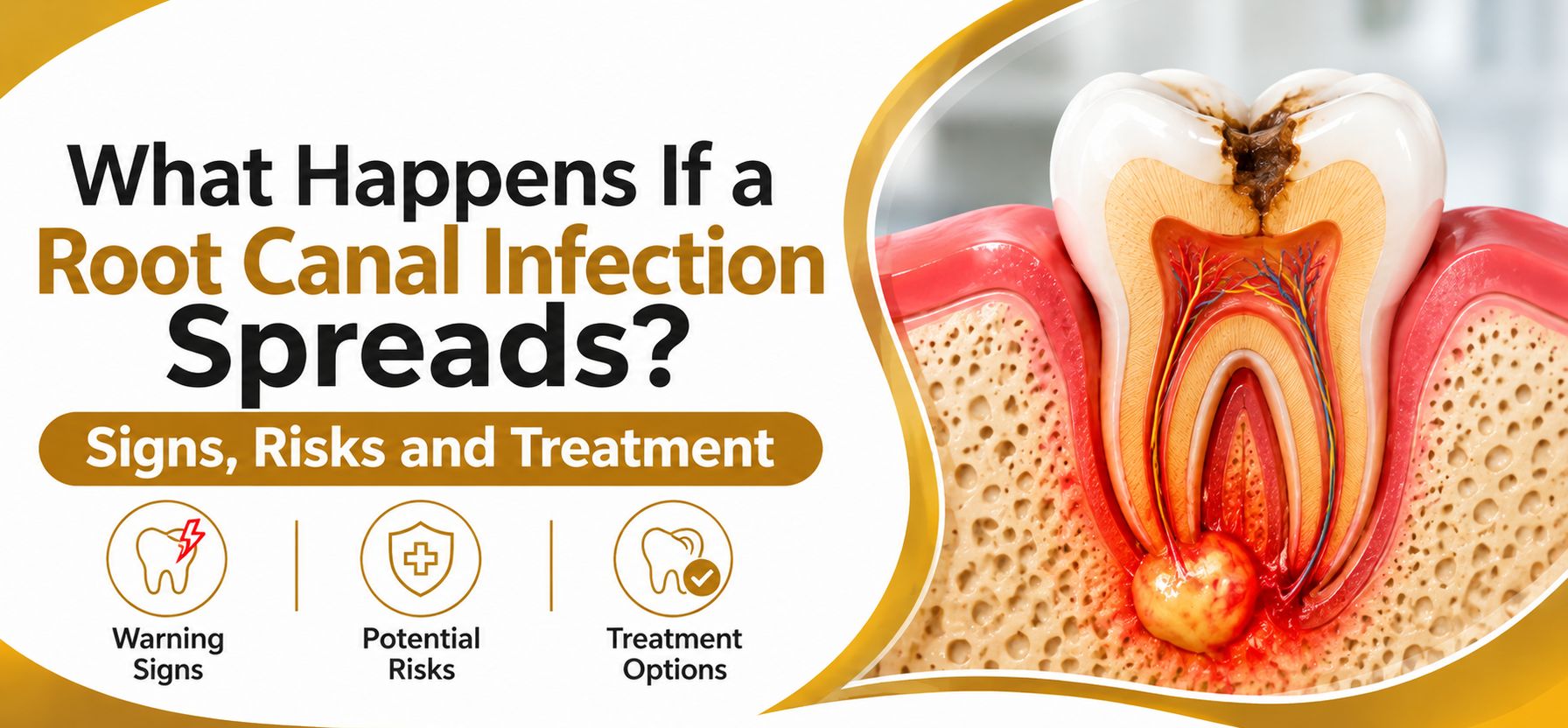
What Happens If a Root Canal Infection Spreads? Signs, Risks and Treatment
While an infection inside your tooth may start out as a simple dental issue, there can be serious complications if it's not taken care of. If bacteria gets into the inner pulp of a tooth they can inflame and become infected and can slowly work their way outside the root of the tooth.
This may impact the surrounding gums, jawbone and close tissues. It is essential to pick up on the warning signs in time so that further damage can be avoided.
A root canal infection can spread if it's not cared for in a timely manner, and it's best to understand what can happen in order to make sure that you're getting the care you need before the situation gets out of hand.
What Is a Root Canal Infection?
Root canal infection happens when bacteria invade the soft tissue inside your tooth (dental pulp). The pulp is filled with nerves, blood vessels and connective tissue which supply its developing tooth. Infections can happen if bacteria get into any deep cavity, cracks, dental injuries or untreated tooth decay.
Understanding Tooth Pulp Infection
When the bacteria get to the pulp they can cause inflammation, damage and ultimately pulp death. As the infection progresses they can work their way through the minute openings at the tip of the root and into the surrounding tissues which can lead to pain, swelling and an abscess.
Common Causes of Root Canal Infection
Some common causes include:
- Deep tooth decay that has reached the pulp.
- Cracked or broken teeth which allow bacteria to get in.
- Dental injuries due to accident or impact.
- Repeated dental work on the same tooth.
- Delayed treatment of an existing tooth infection.
How Does a Root Canal Infection Spread?
A root canal infection typically starts inside the tooth and can spread to the surrounding areas as bacteria move through the root canal system into nearby tissues. It usually begins around the root tip before progressing towards the gums and jawbone.
When the dental pulp becomes infected, bacteria can travel through the root canals towards the tip of the root, causing inflammation in nearby tissues and pain while chewing or putting pressure on the affected tooth.If the infection continues to spread, the surrounding gums and jawbone may also become affected, leading to gum swelling, jaw pain, soreness, and possible damage to the bone tissue around the tooth.
In some cases, bacterial infection can cause pus to accumulate, resulting in a dental abscess. This may appear as a painful lump near the affected tooth or swollen, sore gums. A dental abscess requires prompt attention from a dentist to control the infection and prevent further complications.
What Happens If a Root Canal Infection Spreads?
When a tooth infection is not addressed, bacteria may spread past the root and destroy nearby tissues. Various factors determine how bad the situation could get.
Severe Toothache and Persistent Pain
With the increase of the inflammatory reaction, the pressure in the affected site can lead to persistent or pulsating pain. The patient may feel worse discomfort when chewing or touching the affected tooth. In some cases, the pain may radiate to the jaw, ear, or other parts of the face.
Swelling Around the Gums, Face and Jaw
With the increase of the inflammatory reaction, the pressure in the affected site can lead to persistent or pulsating pain. The patient may feel worse discomfort when chewing or touching the affected tooth. In some cases, the pain may radiate to the jaw, ear, or other parts of the face.
Damage to Surrounding Bone and Tissues
Bacterium can cause harm to the materials that provide support for teeth, such as jaw bone. If the infection lingers too long, bone will begin to be lost, compromising the support of the tooth and making it difficult to preserve the natural tooth.
Spread of Infection to Nearby Facial Spaces
In severe cases, there is infection of deeper areas in the face and neck regions. This will result in swelling that needs immediate medical intervention.
Warning Signs That the Infection Is Spreading
Symptom recognition can play an important role in preventing any complications that may arise and making sure they receive treatment at the earliest opportunity. The following are some typical symptoms:
Increasing Pain and Pressure
Pain in the tooth that is either persistent or progressive when biting can be a sign that the infection has spread to the tissues around the tooth.
Swollen or Tender Gums
Redness, tenderness or swelling near the affected tooth can be a sign of an underlying infection.
Pus Discharge or Bad Taste in the Mouth
An abscess can discharge pus via the gums, leading to bad taste or breath. The infection may persist despite reduced pain after the drainage process.
Fever and General Weakness
Fever, tiredness, and feeling ill could mean that the infection has spread beyond just the tooth. This condition needs immediate medical attention.
What Are the Possible Complications of an Untreated Infection?
Ignoring a spreading root canal infection can lead to complications that affect both oral and general health. One possible complication is dental abscess formation, in which a collection of pus develops around the tooth root or in the surrounding gum tissues, causing pain, swelling and tenderness.
In rare cases, bacteria may spread to the jawbone and cause a bone infection known as osteomyelitis. More serious complications can occur if the infection spreads to nearby neck tissues or enters the bloodstream. Although such situations are uncommon, they can become life-threatening and require immediate medical attention.
How Is a Spreading Root Canal Infection Treated?
The treatment will depend on where the infection is situated and how serious it is, along with the state of the tooth as well as the symptoms that the patient experiences. Here are some possible treatments that a dentist might suggest.
Root Canal Retreatment
In case the earlier procedure has not been successful and there is still some infection within the canals, re-treatment might be recommended. It involves removing the already placed filling material and cleaning and disinfecting the canals.
Abscess Drainage and Infection Control
In case of formation of abscess, there is a need to drain off the pus that has accumulated. Some patients are prescribed antibiotic medication depending on certain factors such as signs of spread of the infection. It should be noted that antibiotics cannot cure the infection of root canals.
Tooth Extraction in Severe Cases
When the teeth are beyond saving, it may become necessary to extract them as the infection needs to be removed. The doctor will then talk about what can replace the teeth after controlling the infection.
When Should You See a Dentist Immediately?
Do not ignore the dentist if you have any of these symptoms: constant toothache, swollen gums, presence of pus, fever, or increased pain in the face. If you have severe swelling in your face or neck, difficulty swallowing, or difficulty breathing, you need to see a doctor immediately.
How Can You Prevent a Root Canal Infection From Spreading?
Good oral hygiene and timely dental treatment play an important role in preventing tooth infections. Follow these simple practices:
- Brush twice daily using fluoride toothpaste.
- Floss regularly to remove food particles and plaque between teeth.
- Avoid delaying treatment for cavities, cracks or persistent tooth pain.
- Complete the recommended root canal procedure.
- Get a permanent crown or restoration placed when advised by your dentist.
- Visit your dentist regularly for examinations and professional cleaning.
Following these habits can help protect your teeth and reduce the risk of future infections.
Conclusion
A root canal infection should never be ignored because bacteria can spread beyond the tooth and damage the surrounding gums, jawbone and facial tissues. Early diagnosis and appropriate dental treatment can help control the infection and preserve your natural tooth whenever possible.
If you experience persistent tooth pain or swelling, consult a dental professional at World of Dentistry for proper evaluation and root canal treatment in gurgaon.