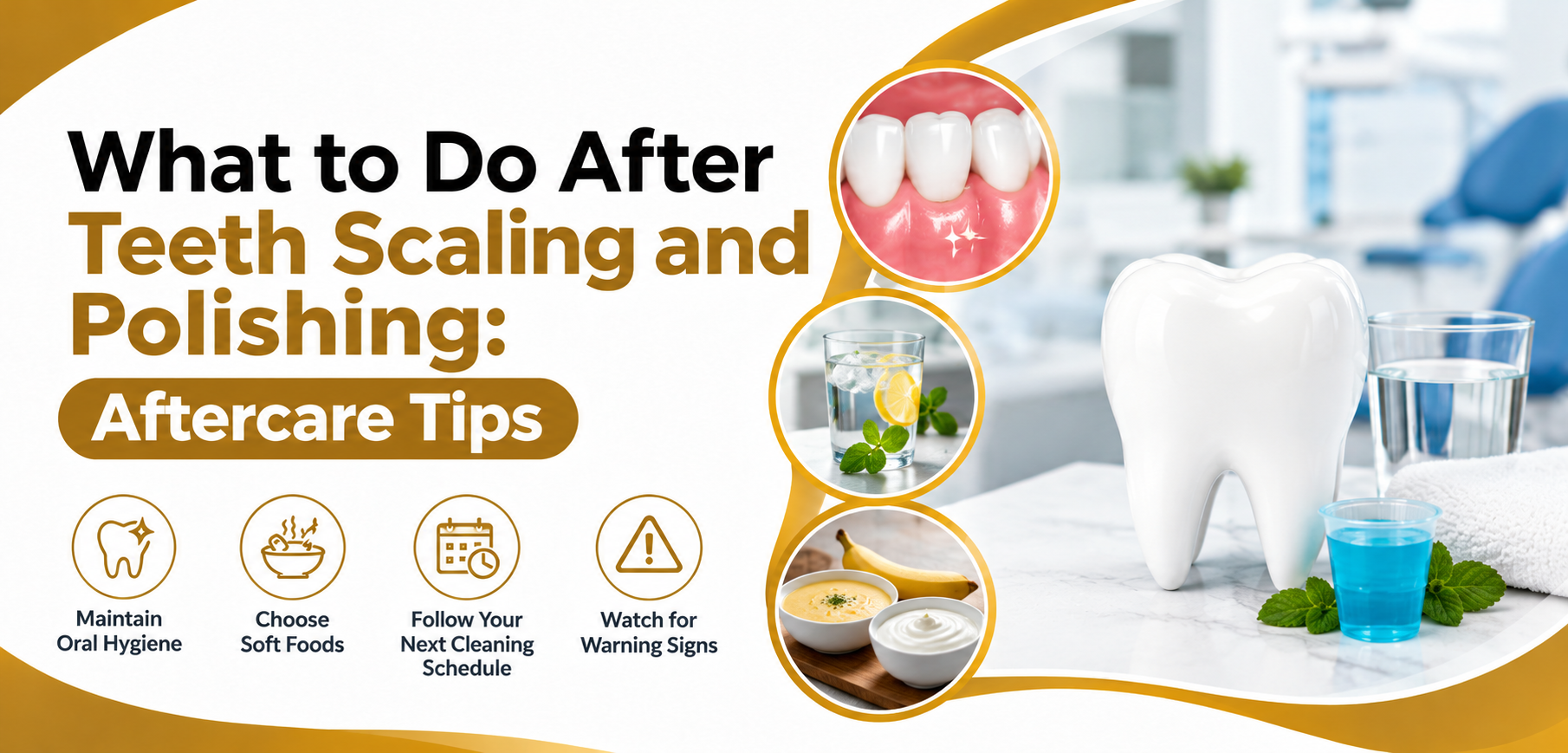
What to Do After Teeth Scaling and Polishing: Aftercare Tips
Cleaning your teeth is one of the most important things you can do to maintain good oral health, but it's just as crucial to take proper care of your teeth after the cleaning is done. Some people may find their teeth sensitive after professionals clean them, or that their gums are tender or a bit bleeding after cleaning, particularly if their teeth are covered in tartar or if their gums are already inflamed. With the right aftercare, you can enjoy your treatment and keep the effects for a long time. We will be talking about what you should do after your SCALING AND POLISHING, the foods you should eat or avoid, what you should be doing to prevent sensitivity, and what habits you should have in order to keep your teeth and gums healthy in this blog.
Your teeth may feel smoother and cleaner after SCALING AND POLISHING because the plaque, tartar and some surface stains are gone. Your teeth and gums might take some time to adjust to the clean though, especially if it's been a deep cleaning. With a little care, you can keep your teeth clean and healthy, and not experience any unnecessary discomfort.
Aftercare Tips to Follow After Teeth Scaling and Polishing
Brush Your Teeth Gently
Brush twice a day using a soft bristle toothbrush. Brushing lightly is better than brushing hard because your gums may be sensitive after brushing. Regular brushing will prevent plaque from re-forming and promote good gum health.
Choose the Right Toothpaste
If your teeth are sensitive after brushing, try using a sensitive toothpaste. Brush regularly and follow your dentist's advice if the sensitivity persists. If your teeth or gums aren't comfortable with any product you use to whiten them, do not use it.
Do not serve very hot or cold foods.
Immediately after treatment, extremely hot or cold foods or drinks may cause sensitivity. Only eat and drink when it is a normal temperature until the teeth feel normal. Sensitivity that persists, talk with your dentist for individual suggestions.
Drink Enough Water
Water is important for lubricating the mouth and for maintaining normal saliva production. Another good water drink is after meals since it cleans away loose food particles. Drinking plenty of water is one of the easiest things you can do to help maintain your oral hygiene.
Eat Soft Foods if Your Gums Feel Tender
When you are uncomfortable, go for something like yoghurt, soft rice, bananas or well cooked vegetables. As the tenderness subsides, you can slowly resume your normal diet. You should not eat any special foods after routine cleaning unless your dentist advises you to do so.
Avoid Smoking and Tobacco
Smoking and tobacco use has a negative effect on the health of your gums and can lead to oral health issues. You can prevent these products from your gums and general oral health. Sensitivity following the treatment can also be helped by not smoking, allowing you to focus on healing and comfort.
Limit Staining Foods and Drinks
Surface staining with time can be caused by coffee, tea, and other strongly coloured foods and beverages. No, you don't have to cut them out of your diet altogether, but if you eat them in moderation and practise good oral hygiene, you can minimise staining. Keep in mind that polishing will take away some surface discoloration, but will not stop new stains.
Continue Cleaning Between Your Teeth
Use an interdental cleaner or floss to clean between teeth and remove food particles and plaque. If your gums are sensitive, be careful, and if necessary ask your dentist to show you how to do it. Regular inter-dental cleaning removes plaque in places where the toothbrush may not be able to clean them effectively.
Do Not Ignore Persistent Symptoms
Slight gum sensitivity or tenderness may happen for a short period, following the procedure. If the pain is quite severe, bleeding is heavy, swelling is worsening, or the symptoms are not improving, however, call your dentist to check it out. These symptoms may need further evaluation and not just waiting to fade away.
Listen to Your Dentist's Advices
Each patient has different oral health needs. Your dentist can suggest specific dental products to help, more gum treatment or an ideal time for your next dental cleaning, depending on the amount of tartar and the health of your gums. Be sure to follow your dentist's recommendations for maintaining the effect of scaling and polishing, and for the health of your teeth and gums. In the event you need expert advice on your dental health, you could head to the dentist in Gurgaon for tailored oral health advice.
Yet another point it is important to keep in mind is that SCALING AND POLISHING is NOT a substitute for brushing and flossing daily.Professional cleaning can help remove hardened deposits that cannot be effectively removed by home care and a toothbrush, and regular home care can prevent new deposits from forming. Having a healthy diet, cutting down on many sweets and regularly visiting the dentist can help keep your mouth healthy in the long run as well.
Teeth also look slightly different after getting rid of the tartar due to the natural surface of the teeth being exposed. It is not always the case that the procedure has affected your teeth; if you notice your teeth feel more sensitive or gaps have increased between them you should check back with your dentist. Cleaning may show more gum recession and significant tartar accumulation if they already exist. Your dentist will be able to tell you what is normal for you.
Conclusion
Correct post SCALING AND POLISHING care can help to keep your mouth clean and gums healthy. Simple, easy habits are gentle brushing, proper nutrition, frequent interdental cleaning, and following your dentist's advice. While it's normal to experience some pain and swelling for a short period of time, if it persists, you should not take it lightly. Regularly brushing at home and visiting the dentist for professional cleaning can help to maintain a cleaner smile and support your overall dental well-being.