Your Moment of Decision is always out of indecisiveness, but we want you to make the best decision for yourself. And in the World of Dentistry, we are here to give you the correct information about traditional braces as well as invisalign. We will go through all the benefits. All the disadvantages and most importantly, which one suits your lifestyle, your teeth, structure and overall decision to help you choose between the classic path or make a clear choice.
At last, you can now embark on the journey of investing in the straight, confident smile you have always been waanting. This is a big and exciting decision! But then there's the most important decision you have to make: Do you choose the traditional, reliable form of metal braces, or do you choose the new, invisible comfort of Invisalign? We know it feels high stakes. It will impact your appearance, comfort, and lifestyle for the next year or two.
We want to help you look past the sales pitch and provide you some key, relevant comparisons. Both options are very effective in correcting alignment and bite challenges. However, they both function vastly differently. Below, we lay out some pros and cons, main differences, and key point differences - so you can feel confident in making a decision that is right for you, your lifestyle, and your teeth.
1. Aesthetics and Lifestyle: Visible vs. Invisible
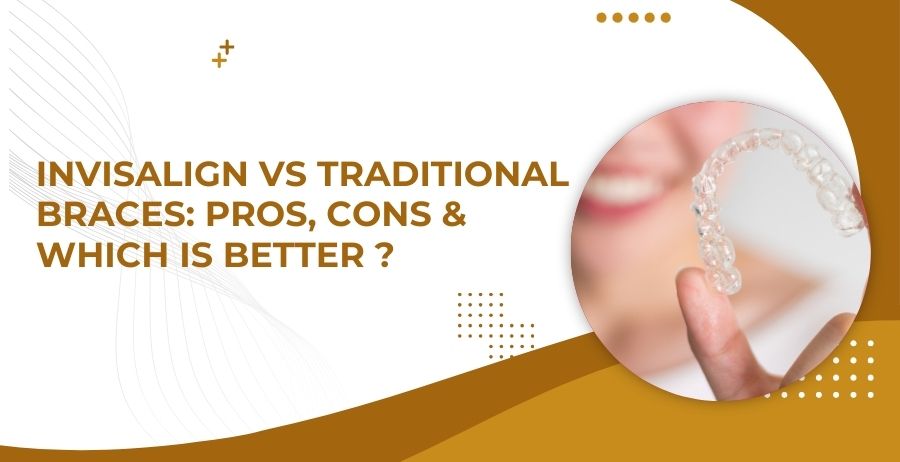
The first difference that patients notice immediately is how they look in the two options. Invisalign has a clear advantage here. The aligners are made of clear, smooth, plastic. When you wear them, they are virtually invisible. This makes them a smart option for professionals, adults, or teenagers that would like to go through orthodontic treatment without announcing the treatment to those around them during social occasions.
Conversely, Traditional Braces are visible metal or ceramic brackets that are bonded right to your teeth and connected with wires. Although ceramic brackets are more discreet than metal brackets, the hardware itself is still just as visible. If looking discreet is your number one concern, Invisalign will have the clear advantage.
2. Effectiveness and Complexity: Easy Cases vs. Complex Cases
Effectiveness is often dependent on the severity of your orthodontic issue, although both methods are great, they have different advantages.
Traditional Braces will always be the gold standard for the most severe or complex orthodontic problems, due to their fixed hardware and ongoing force. Traditional braces are best for significantly rotating teeth (about 45 degrees), closing gaps in teeth that are more than a few millimeters, and treatment of large bite issues, such as severe overbites or underbites. Braces give complete control of movement of every tooth to the orthodontist.
Invisalign will perform better in the case where the issue is minor to moderate when it comes to moving teeth. Invisalign works best for minor alignment problems, spacing issues and small bite corrections. Therefore, if the aligners are removable for self service, the technology may not be as effective with more severe issues due specifically to complex movement. For most minor to moderate orthodontic issues, Invisalign can produce the same great results as traditional braces. Ultimately, however, it depends on your orthodontist and severity of your bite, to determine what may be necessary to use.
3. Comfort and Oral Hygiene: Removable vs. Fixed
Your everyday experiences and comfort levels will fluctuate significantly, based on your selection of options.
Oral Hygiene is vastly simplified with Invisalign. The aligners are removable for eating, brushing and flossing. You do not alter your normal oral hygiene regimen. This practice will limit the chance plaque builds up, or staining or gum inflammation occurs, which often occurs with fixed appliances.
With Traditional Braces, since they are fixed the hardware is difficult to brush and/or floss. Food gets stuck in the wires or brackets easily, and they require special tools, like a cleaning floss threader, which takes time and commitment. Comfort-wise, traditional braces can cause irritation, abrasions, and mouth sores due to the sharp edges of the metal. However, Invisalign aligners are much smoother overall, and only creates temporary slight pressure when switching to a new alignment tray.
4. Patient Compliance and Cost Factors
Two components that exist outside of the clinical aspects: your effort and/or asking billing amount.
Invisalign requires compliance for the treatment to be successful. The aligners must be worn between 20-22 hours each day. If you do not have enough discipline to wear them consistently, either the process will be prolonged or treatment will fail. When using braces, you are compliant with the brackets and wires being fixed in your mouth.Cost is another significant differentiator. Generally speaking, traditional metal braces are less expensive. Invisalign, on the other hand, is more expensive due to the advanced 3D technology and customized material used in its fabrication.
Conclusion: Weighing Your Options
Neither treatment option is "better" than the other. The one that is "best" will depend on your dental needs as well as your personal lifestyle and budget. If your case is severe and complex, traditional braces provide the consistent and proven mechanics you will need. If the case is moderate and a priority is discretion and ease of hygiene, Invisalign is an excellent, modern management strategy.
Your first step should be the longest consultation. Your oral health professional at World of Dentistry will determine how complicated your bite is. They will probe you about your habits related to compliance and your budget. Together, you will select the option that will produce the best result specifically for your unique smile, with the most predictable outcome attainable.