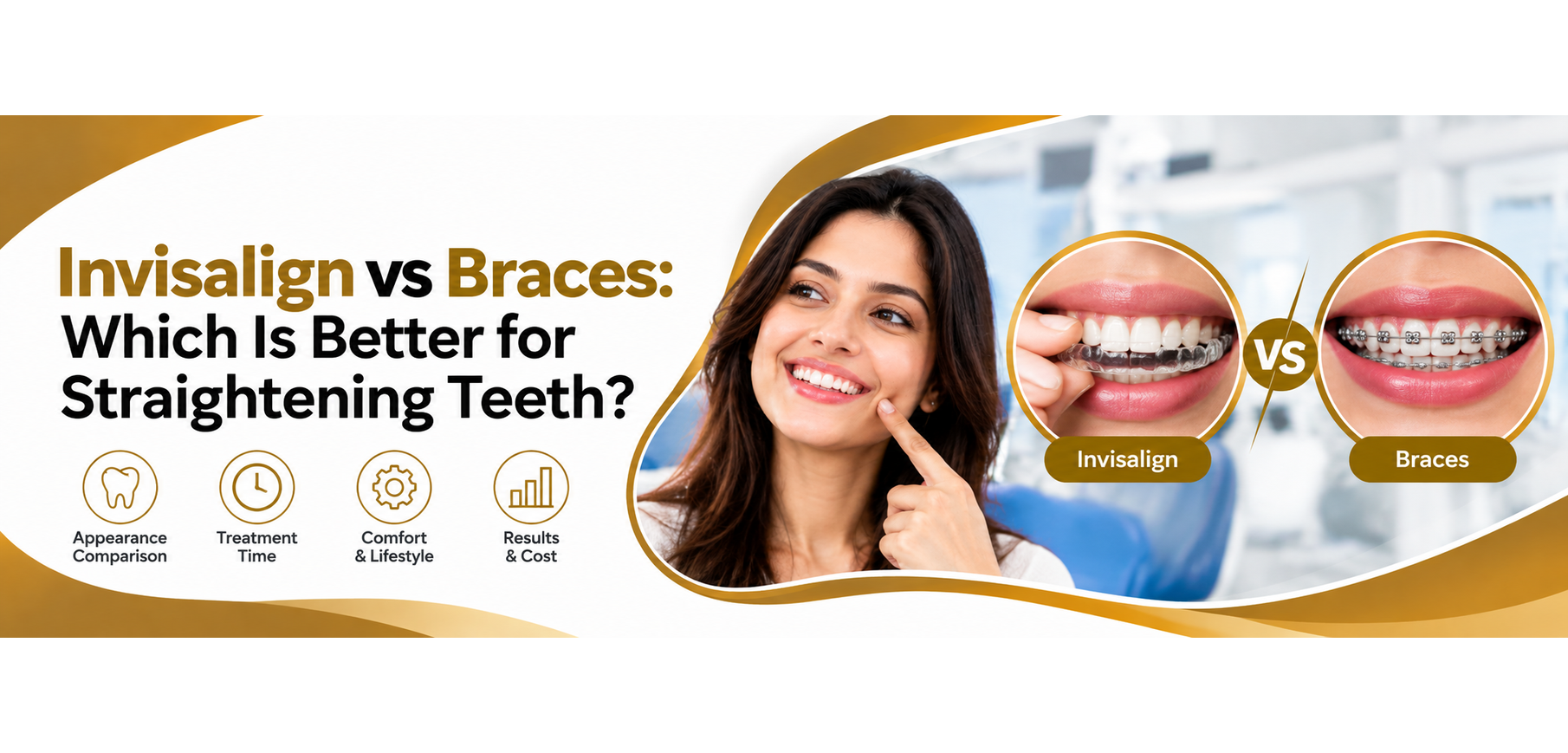
Invisalign vs. Braces: What is the best option for straightening teeth?
A straight and healthy smile will enhance your smile and make you feel more confident. Crooked Crowded or Gapped Teeth: Orthodontic treatment can help you achieve a beautiful smile and good bite function. There are two of the most common treatments for teeth straightening that people use to straighten the teeth today, such as Invisalign and traditional braces.
However, which one is the best?
It would depend on your own oral condition, way of life, treatment objectives, as well as spending plan. Either can help to straighten teeth, but each of them has a way of doing it and their advantages are different.
Here, World of Dentistry provides a comparison of Invisalign and regular braces so you can determine which one might be best for you.
What Is Invisalign?
Invisalign is an orthodontic therapy which involves a series of clear, removable aligners that progressively push teeth into desired locations. Aligners are tailor-made for the patient and are changed during the treatment as directed by the dentist.
The best thing about Invisalign is that it looks natural. The clear braces are far less conspicuous than the traditional metallic braces and are a favored choice of adults and teens.
Invisalign clear braces are removable, so you're able to remove them during meals, brushing and flossing. They should be worn consistently however, typically for approximately 20-22 hours per day, in order to realize the intended results.
What Are Traditional Braces?
Typical braces are made of metal brackets and wires that are glued on the teeth. They apply a light and controlled pressure that gradually moves teeth in alignment.
Braces have been around for quite some time and can address many orthodontic issues such as gaps, crowded teeth, crooked teeth, and some bite issues.
Traditional braces are attached to your teeth during treatment, unlike Invisalign. No need to keep track of them after meals or cleaning.
Invisalign vs Braces: Appearance
One of the most obvious differences between the two treatments is their appearance.
Invisalign aligners are made with a clear material that is designed to be worn without being noticed. They can be especially alluring if you desire to straighten your teeth without your audience knowing you are going through orthodontics.
The brackets and wires of traditional metal braces will make them more noticeable. Today's braces are also smaller and more comfortable than many of the previous designs, and some people might also be a candidate for more subtle ceramic braces.
Although it is the best choice for discretion, Invisalign may be the preferred option.
Which is more comfortable?
The treatments can be uncomfortable in the early days while your teeth realign, but this will pass.
Invisalign will cause pressure or slight soreness when first starting new braces. The smooth surface of the aligners may help to minimize irritation.
While some people are happy to receive traditional braces, they may find the braces to cause gum, cheek or lip irritation, especially when they first get them or after they are adjusted.
Everyone is different, and your dentist or orthodontist can give you information about what to expect from your treatment, regarding comfort.
Eating and Oral hygiene
Unlike traditional braces, Invisalign is more flexible when it comes to eating. The aligners are removable so they are easy to eat with and can be taken out as directed by your dental professional.
Traditional braces may require you to steer clear of specific hard, sticky or chewy foods that can break a bracelet or wire.
Another advantage of Invisalign is that you can also brush and floss more easily without having to remove the braces. Additional care must be taken to clean around braces and wires.
Good oral hygiene is important for everyone, no matter what type of treatment you are receiving, to help keep your teeth and gums healthy.
Is it possible to correct the same issues with Invisalign as with braces?
Invisalign can correct many common orthodontic issues including some instances of crowding, spacing and bite problems. But it might not be the best choice for all patients.
Traditional braces or a different alternative treatment option may be necessary for some complicated orthodontics cases. It depends on your teeth position, bite and how much movement is needed.
It is important to have your teeth evaluated by a competent dental care practitioner prior to deciding on a treatment for this reason.
Invisalign vs Braces: Which is Faster?
The length of time that the treatment will last varies with Invisalign and traditional braces.
Treatment duration will vary depending on the complexity of your case, the amount of tooth movement that is needed to correct the case, your age, and the degree of adherence to your treatment plan.
Depending on the case, sometimes Invisalign treatments can be relatively short, and braces can also be effective in certain cases.
Instead of just deciding on a treatment solely because of time it might take to work, consult with your dentist or orthodontist about how long you may expect a treatment to last.
Invisalign vs Braces: Which One Is Good for You?
Invisalign may be a good choice if you:
- Desire an inconspicuous dental braces treatment.
- Prefer removable aligners.
- Don't want additional restrictions on foods.
- Prefer an easier brushing and flossing routine.
- Will adhere to wearing aligners consistently.
Traditional braces may be a good choice if you:
- Have a more complicated orthodontic problem.
- Like to have a set treatment.
- Do not want to have to remember to wear removable aligners.
- Tolerant of sight of brackets and wires.
- Requires precise movement of teeth.
The treatment that's best for you should be recommended by your dentist or orthodontist after examining your teeth and bite.
Final Thoughts
So, is Invisalign better than braces? Not necessarily. Both therapies are effective in straightening teeth, but which is the most suitable one will depend on your own dental needs and preferences.
Invisalign offers clear, removable braces that can be convenient and discreet, while traditional braces offer a reliable fixed treatment that can treat a wide array of orthodontic issues.
If you are thinking about undergoing orthodontic treatment, you should consult with an expert dental professional before making your decision.